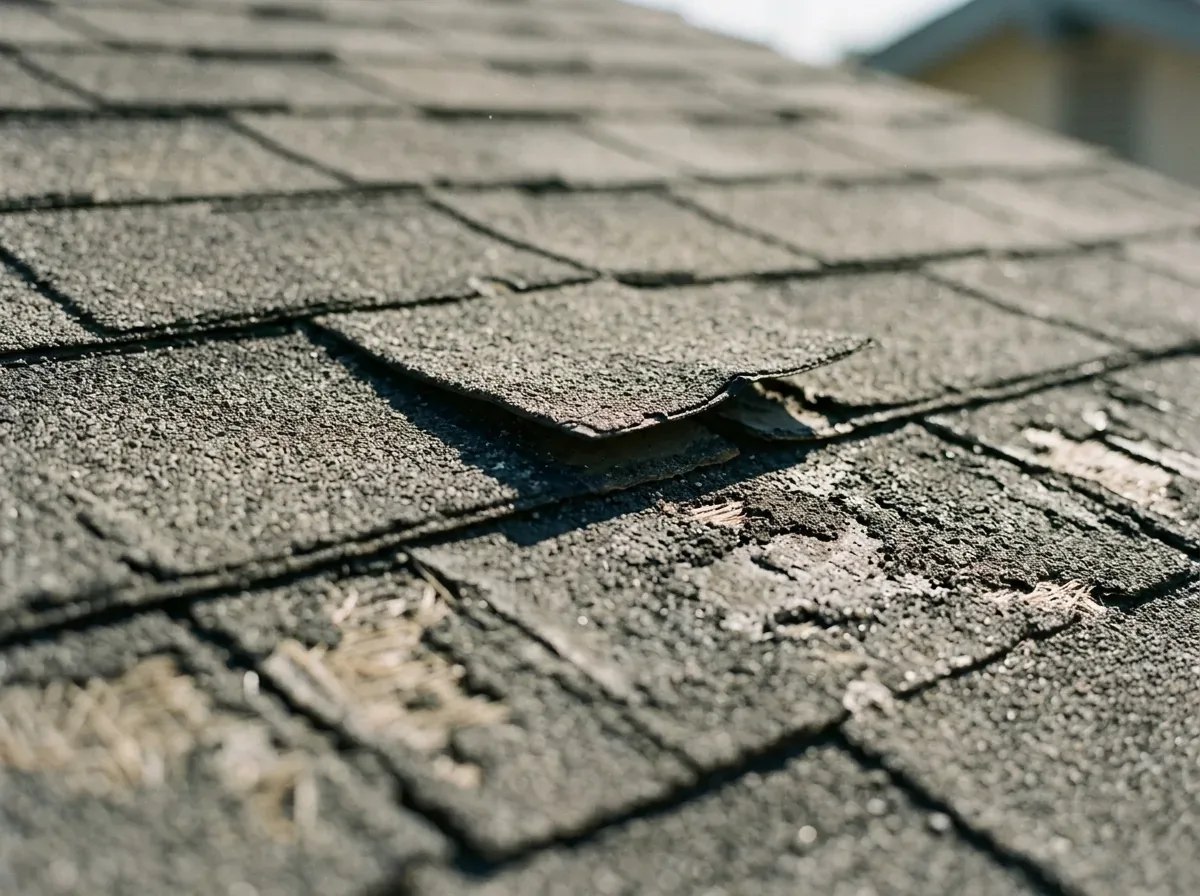
Roof leak repair in Baldwin Park, where the leak is traced to where water actually enters rather than to the stain below it - and where you are told plainly if a repair is no longer the honest answer.
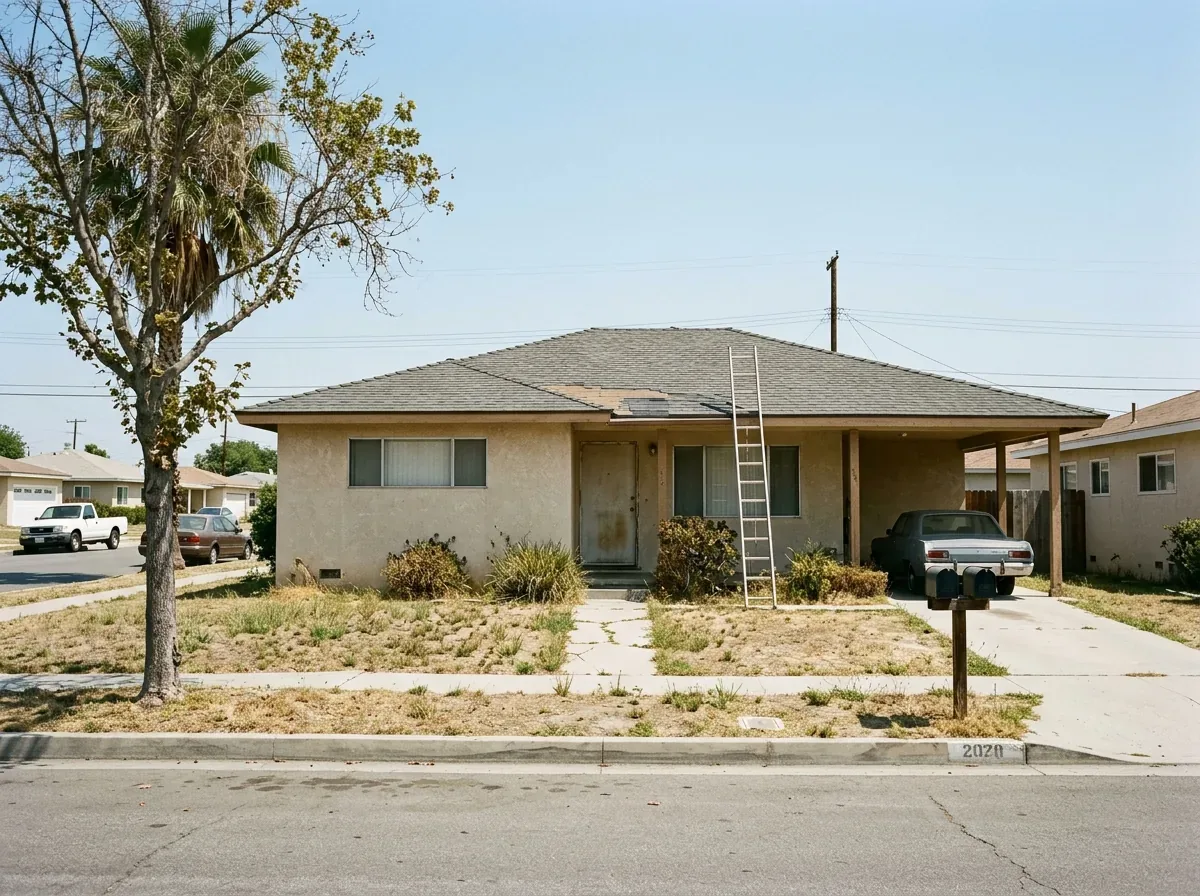
Almost every house in this city went up between 1940 and 1999, most of it in the 1950s, and almost all of it on one story with a shallow pitch. On a roof that flat the water does not run off a fault, it sits on it, so the leak you are seeing has usually been developing for several summers before it ever reached the ceiling.
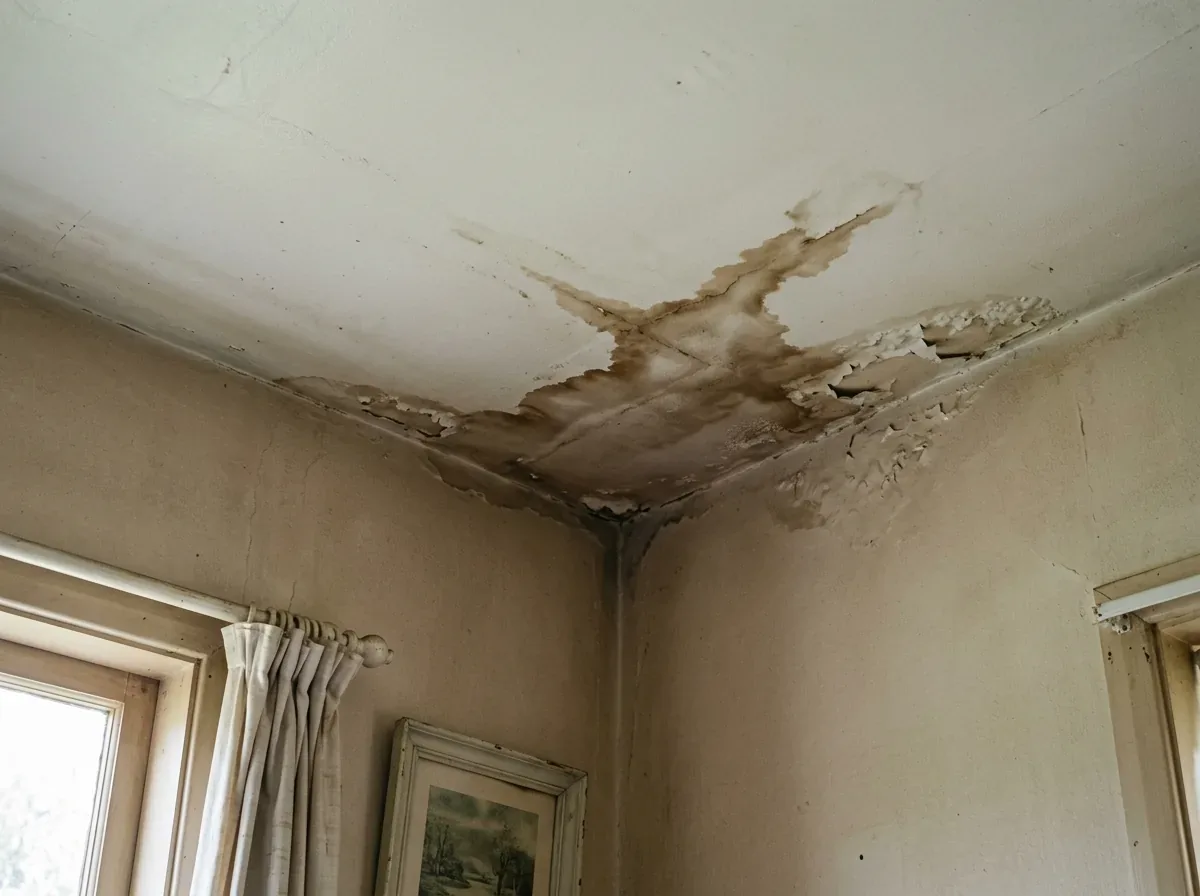
On a low-pitched San Gabriel Valley roof the entry point is almost never above the stain. Water runs along a rafter or the top of the ceiling and drops at the first low point it reaches, which can be several feet from where it got in.


Most leak repairs in Los Angeles County land between $350 and $1,500. Caught early, before the deck is wet, minor repairs start around $200 to $500. Locally, Baldwin Park is about as straightforward as this work gets: flat lots, single story, simple roof shapes and easy access. That keeps labor at the lower end of every range on this page, and it is why a quote well above these figures deserves a question.
Calling at the first stain. A leak that has not reached the sheathing is a flashing job, not a carpentry job.
Wet decking, a second story, tile that has to be lifted to reach the detail, or an out-of-hours call.
If the same slope has been patched twice, we will say so and price the replacement instead of selling you a third patch.
REQUEST A QUOTE
Complete the form and describe the work you need help with.
This is the most expensive mistake a homeowner makes in this market, and it is usually made on someone else's advice.
A slipped course, a split upstand, a cracked vent boot or a flashing that has let go are each a repair costing hundreds. Each is also routinely presented as evidence that the whole roof is finished.
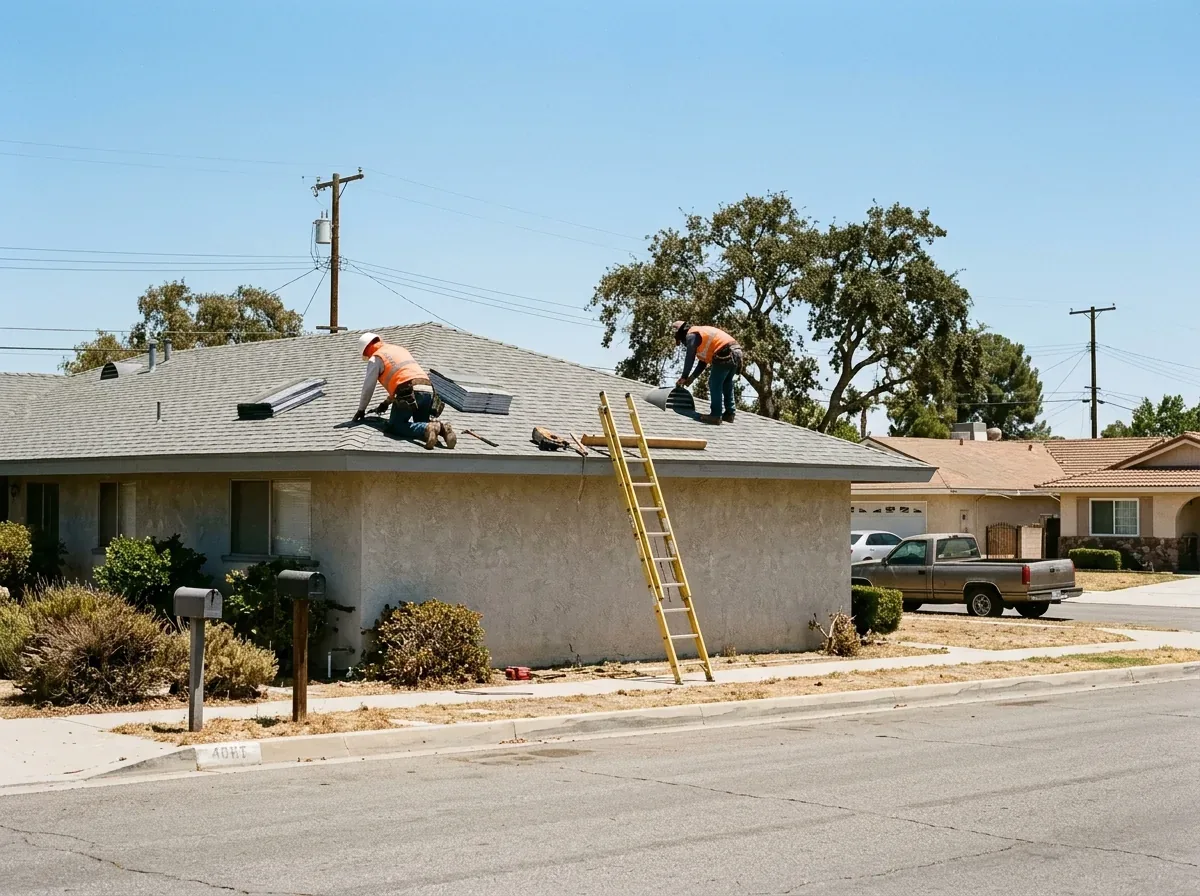
Look away from the leak. If the covering across the rest of the slope still has granules, still lies flat and is not brittle, the roof has life in it and the repair is the right job.
A tile roof quoted at $30,000 to $60,000 for replacement is very often an $8,000 to $22,000 lift and relay, because the tile is fine and only the felt beneath it has failed.
Sometimes the answer really is a replacement, and saying so is the same job as saying the opposite. What you should not accept is either answer without being shown why.
Free inspection of the roof and the attic together, then a written quote.
Describe what you are seeing and roughly when it started. Most leaks are narrowed down from a short conversation and a photograph before anyone travels.
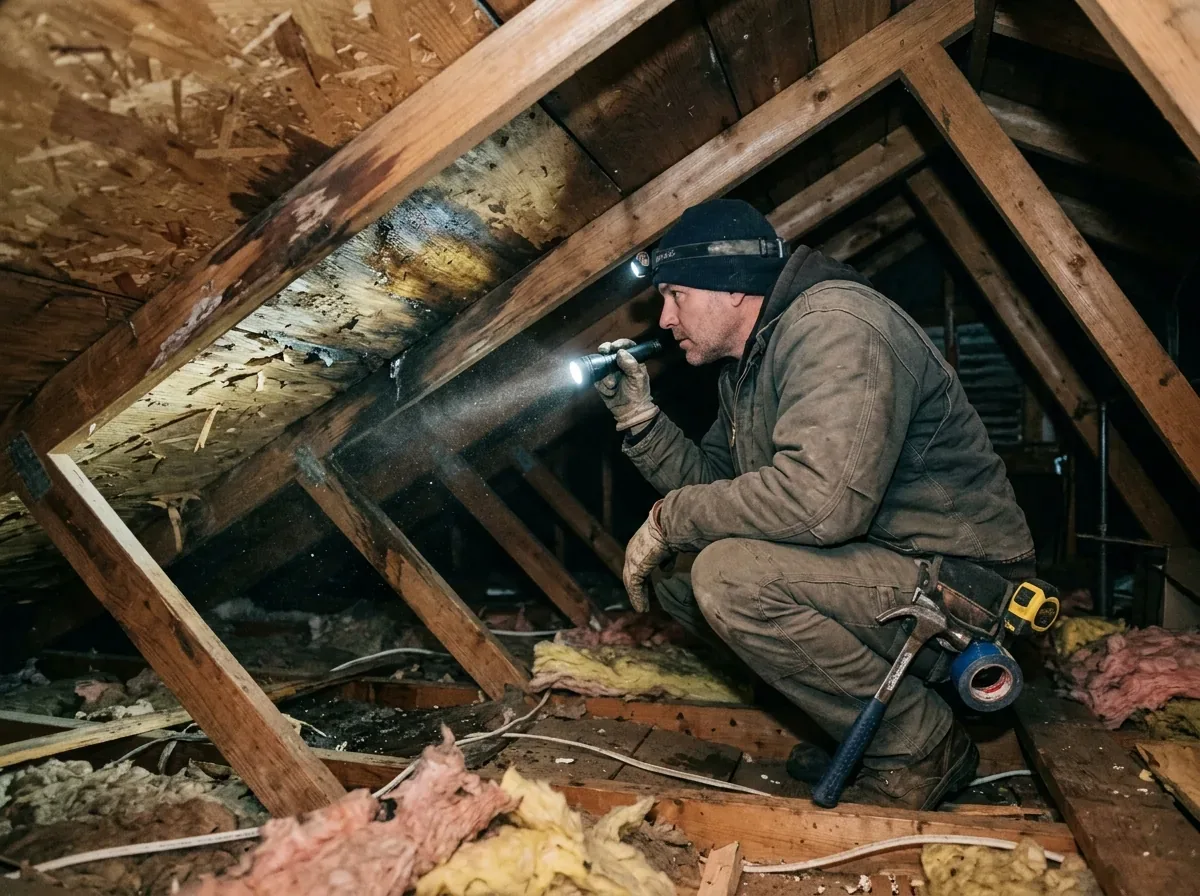
Both, together. On a low-pitch valley roof the entry point and the stain are rarely in the same place, so a survey that skips the attic is half a survey.
The failed detail named -- the valley, the boot, the upstand -- not 'repair roof'. Sheathing priced per sheet so nothing is added later without your say-so.
The area left clean and nails swept, and the before-and-after set is yours to keep whatever you decide to do next.
Including ours. There are enough door-knockers working this valley that the checks are worth making on anybody.
Roofing in California requires a CSLB C-39 license. The number is public and checkable on the CSLB register in about a minute. Ask for it before anyone goes up a ladder.
'Repair roof' is not a scope. 'Re-bed the valley, re-lap two upstands, replace the vent boot' is. The second can be checked when it is finished; the first cannot, which is the point.
A fire-rated assembly, a tear-off versus an overlay, and a sheathing allowance each move the price by thousands. A cheaper quote is sometimes a lesser roof rather than a better price.
No price should be given without the roof and the attic being walked. We do not quote at the door, and we do not quote from a photograph alone.
More than 50% of the roof area inside any one-year period is the line California draws, and it is cumulative - two separate jobs twelve months apart get added together. Below it you are repairing. Cross it and the WHOLE roof has to comply with current code, not just the part anybody touched.
That matters more on a repair site than on a replacement one, because it is the ceiling on what we can sell you. A fourth patch on the same roof in one year is not four small jobs; it is a re-roof arriving by installments, priced worse than a re-roof and without the compliance. We would rather say so at the second patch than at the fourth.
Baldwin Park permits through its own building department, as do West Covina, El Monte, Irwindale, Azusa, La Puente and Covina - seven cities, seven counters, and no single answer for the valley. Routine leak repair needs no permit in any of them. Crossing the 50% line does, and which desk you go to depends on which side of a street you are on.

Known as Vineland from 1860, renamed Baldwin Park in 1906, and incorporated in 1956 as California's 47th city. Detached single-family housing built overwhelmingly between 1940 and 1999, with a 1950s boom filling most of the city.
A low-pitched ranch roof sheds water slowly, so it is far less forgiving than a steep one: a lifted lap or a blocked valley that a forty-degree roof would shrug off will hold water here. Seventy years of sun has usually done more damage than any single storm.
Baldwin Park calls itself the Hub of the San Gabriel Valley, and single-family zoning covers roughly 2,310 acres -- effectively the whole developable city.

Baldwin Park and the six San Gabriel Valley cities around it. Each one permits through its own building department, which is the practical difference between them.
Valley floor rising into the South Hills.
Dense, added-to, and short of working room.
Quarry country. Dust in every valley and outlet.
Foot of the mountains. Fire zone and canyon wind.
Old grove land, small lots, lots of junctions.
A pre-war core with a post-war ring around it.
The wider valley, ranch tracts and flat additions.
The questions that decide this job, answered before you have to ask them.
Usually not. Water gets in at a junction, runs along a rafter or the top of the ceiling, and drops at the first low point it reaches. On a low-pitch valley roof that can be several feet from the entry point, which is why the attic gets walked as well as the roof.
Yes, and it is the most useful symptom you can give us. A roof that leaks only in driving rain is usually failing at an upstand or a lap that is fine under vertical water, which narrows the search a long way before anyone gets on the roof.
Leak repairs are usually an estimated $350 to $1,500, and small ones caught early start around $200. A full replacement, when a roof is genuinely finished, is estimated at $10,000 to $25,000. The range is wide because pitch, access, covering and what the old roof was hiding all move it, which is why the inspection is free and the quote is written down.
Often you do not. A failed flashing, a slipped course or a split upstand is a repair costing hundreds, and each is routinely presented as proof the whole roof is finished. The test is whether the covering away from the failure still has life in it. We will show you, on the roof or in the photographs, and quote the repair when the repair is right.
Maybe, but get a second opinion before you sign anything, and never accept a price given at the door. Ask for a CSLB C-39 number and check it on the public register. That takes a minute and it is the single most effective thing you can do.
A free inspection, a written quote for the repair, and a straight answer about whether repairing it is still worth doing.